

Projects that
generate impact

Research projects with academic rigour that produce relevant legal knowledge and solutions for society’s challenges.

54Projects
14Ongoing
40Completed
Sort by
Preparing AltExit: Preliminary Research and Proposal Development for an ERC Starting Grant on Eurosceptic Legal Contestation in the EU

PROJECT FCT

Preparing AltExit: Preliminary Research and Proposal Development for an ERC Starting Grant on Eurosceptic Legal Contestation in the EU

2026–2026

The AltExit project examines how Euroscepticism has evolved in the European Union following Brexit. Rather than advocating withdrawal from the EU, many political actors have shifted towards influencing and contesting European integration from within its institutions, using legal and political mechanisms to advance alternative agendas.

Orlando Scarcello
Lead Investigator Orlando Scarcello
→
TAXATION AND GENDER: humanizing taxes for equality – interdisciplinary study (TAX & GENDER)

PROJECT FCT

TAXATION AND GENDER: humanizing taxes for equality – interdisciplinary study (TAX & GENDER)

Ref.ª 2024.16704.PEX · 2026–2027

Taxes have a profound impact on the way people live, work, and participate in society. Yet, we rarely ask whether tax systems affect women and men in the same way. The Tax & Gender project takes this question as its starting point, investigating how taxation can contribute to reducing gender inequalities or, conversely, perpetuate them. Through an interdisciplinary approach combining Law, Taxation, Economics, and Gender Studies, the project examines the impact of tax policies on women’s lives and assesses the extent to which the Portuguese tax system incorporates a gender perspective.

Rita Calçada Pires
Lead Investigator Rita Calçada Pires
→
Justice Professionals Listening to and Engaging Safely with Traumatised and Exploited Children (JUST-LISTEN)

PROJECT EUROPEAN COMMISSION

Justice Professionals Listening to and Engaging Safely with Traumatised and Exploited Children (JUST-LISTEN)

Ref.ª 101254164 · 2026–2027

The JUST-LISTEN project aims to contribute to the integration of a child rights-based approach into justice systems, ensuring that children are heard and able to participate effectively in judicial proceedings, particularly in cases involving sexual abuse and exploitation. To this end, the project will provide 400 justice professionals with trauma-informed, inclusive and gender-sensitive training, while also developing tools and methodologies in collaboration with children themselves, integrating their participation into the design and evaluation of the solutions developed.

Odete Severino Soares
Lead Investigator Odete Severino Soares
→
Family in an Aging Society: Legal Support for Caretaking Through the Demographic Winter (AG&CARE)

PROJECT FCT

Family in an Aging Society: Legal Support for Caretaking Through the Demographic Winter (AG&CARE)

Ref.ª 2024.16704.PEX · 2025–2027

The AG&CARE project examines the legal and social challenges arising from population ageing, declining birth rates, and changing family structures, in a context of increasing pressure on families and the State to ensure adequate care for older people. Focusing on Portugal and the United States, the project explores non-conjugal caregiving relationships, such as those between friends or relatives who live together and provide mutual support, seeking to understand how the law can recognise and protect these emerging forms of care.

Nausica Palazzo
Lead Investigator Nausica Palazzo
→
Capacity building in the field of Higher Education for Legal, Social and Digital Advancement through the promotion of Excellence in Research and Sustainable Connectivity in the Philippines (CALSADA)

PROJECT EUROPEAN COMMISSION

Capacity building in the field of Higher Education for Legal, Social and Digital Advancement through the promotion of Excellence in Research and Sustainable Connectivity in the Philippines (CALSADA)

Ref.ª 101237381 · 2025–2029

The CALSADA project aims to enhance the quality of graduate legal education in the Philippines by addressing challenges such as the excessive focus on bar examination preparation, the limited integration of research and interdisciplinary approaches, unequal access to graduate legal education, and insufficient digitalisation and institutional connectivity. Through collaboration between Filipino and European stakeholders, the project seeks to promote a more innovative, inclusive, and research-driven model of legal education, strengthening the capacity of legal education institutions to respond to contemporary challenges.

Francisco Pereira Coutinho
Lead Investigator Francisco Pereira Coutinho
→
EU’s Democratic and Normative Assessment (EUDNA)

PROJECT EUROPEAN COMMISSION

EU’s Democratic and Normative Assessment (EUDNA)

Ref.ª 101240777 · 2025–2028

The EUDNA project aims to strengthen civic education on democracy, the rule of law, human rights, and minority rights through an interdisciplinary and experiential approach. Adapted to the educational contexts of Italy, Portugal, North Macedonia, and Lithuania, the project combines an interdisciplinary civic education curriculum with debates, simulations, and role-playing activities, equipping students with the knowledge and practical skills needed to participate actively and responsibly in democratic life.

Francisco Pereira Coutinho
Lead Investigator Francisco Pereira Coutinho
→
The Enforcement of EU Digital Regulation: Administrative and Constitutional Challenges (DigiForce)

PROJECT EUROPEAN COMMISSION

The Enforcement of EU Digital Regulation: Administrative and Constitutional Challenges (DigiForce)

Ref.ª 101240597 · 2025–2028

The DigiForce project is an annual programme dedicated to addressing the administrative and constitutional challenges arising from the implementation of European Union Digital Regulation, with a particular focus on the Artificial Intelligence Act (AI Act) and the Digital Services Act (DSA). The project combines an intensive summer school at NOVA School of Law with a series of in-person and online seminars, seeking to address the legal uncertainties and gaps that currently exist in the application of these new European regulatory frameworks. By bringing together experts in EU Administrative Law, digital regulation, and Law & Technology, DigiForce aims to promote greater legal clarity at a crucial moment as these legislative instruments enter into force.

Filipe Brito Bastos
Lead Investigator Filipe Brito Bastos
→
Corporate Respect for Human Rights in Conflict-Affected and High Risks Areas (CAHRA)

PROJECT EUROPEAN COMMISSION

Corporate Respect for Human Rights in Conflict-Affected and High Risks Areas (CAHRA)

Ref.ª 101237553 · 2025–2028

The CAHRA project seeks to strengthen the implementation of Human Rights Due Diligence (HRDD) by companies operating in or sourcing from conflict-affected areas, responding to the evolving European legal framework, particularly the Corporate Sustainability Due Diligence Directive (CSDDD). Focusing on Colombia and Ukraine, the project aims to build the capacity of Higher Education Institutions to act as regional hubs for training and expertise in human rights and responsible business conduct.

Laura Íñigo Álvarez
Lead Investigator Laura Íñigo Álvarez
→
EU Banking Law: bridging gaps with the community

PROJECT EUROPEAN COMMISSION

EU Banking Law: bridging gaps with the community

Ref.ª 101240746 · 2025–2029

The primary aim of this EU_Bank is to generate and share impactful knowledge on critical issues within the EU banking market while promoting financial literacy among students, researchers and the general public. The module’s teaching component will equip master students with a robust understanding of the fundamentals of EU banking law. This will be enriched by contributions from legal practitioners, industry experts and policymakers operating at national and EU levels. These experts will feature as guest lecturers in selected classes as part of the teaching program, providing practical insights and real-world understanding of the subject.

Joana Farrajota
Lead Investigator Joana Farrajota
→
International Law of Security, Peace and Sustainable Development (ILSPSD)

PROJECT EUROPEAN COMMISSION

International Law of Security, Peace and Sustainable Development (ILSPSD)

Ref.ª 101238242 · 2025–2031

The Erasmus Mundus Master in International Law of Security, Peace and Sustainable Development (ILSPSD) is a two-year international programme that brings together six leading European universities to provide an integrated and multidisciplinary education in international law, security, peace, and sustainable development. The programme is designed to prepare a new generation of legal professionals and policymakers, equipping them with the skills needed to understand contemporary global challenges and the role of international law in promoting more secure, peaceful, and sustainable societies.

Felipe Pathé Duarte
Lead Investigator Felipe Pathé Duarte
→
Portugal, Cold War International Law, and the Refugee Convention (POLITIC)

PROJECT FCT

Portugal, Cold War International Law, and the Refugee Convention (POLITIC)

Ref.ª 2024.16704.PEX · 2025–2027

This project seeks to investigate the ways in which Cold War politics shaped Portugal’s accession to the 1951 Refugee Convention in 1960, fourteen years before the Carnation revolution marked the country’s break from authoritarian rule. While scholars have examined the relationship between the Cold War and Portugal’s membership in the NATO alliance, the context of its accession to the Refugee Convention remains largely uncharted. This is visible not only in the literature on the Estado Novo, but also in the scholarship on Cold War international law, part of which has explored how the Cold War shaped international refugee law.

Veronica Corcodel
Lead Investigator Veronica Corcodel
→
Creating a joint Infrastructure for Dialogue, Research and Advocacy between Europe and Africa (CIDRA)

PROJECT EUROPEAN COMMISSION

Creating a joint Infrastructure for Dialogue, Research and Advocacy between Europe and Africa (CIDRA)

Ref.ª 101175811 · 2024–2027

The CIDRA project aims to establish a permanent network for academic cooperation between Europe and Africa, promoting joint research, knowledge exchange, and the development of public policies that strengthen regional integration and collaboration between the two continents. The initiative seeks to deepen understanding of regional and transregional governance dynamics, economic and political interdependencies, and shared global challenges, contributing to stronger and more sustainable relations between Europe and Africa.

Francisco Pereira Coutinho
Lead Investigator Francisco Pereira Coutinho
→
Key Fundamental Rights Issues in the EU (RIseEU)

PROJECT EUROPEAN COMMISSION

Key Fundamental Rights Issues in the EU (RIseEU)

Ref.ª 101175180 · 2024–2027

RIseEU proposes a 72-hour teaching programme on Key Fundamental Rights Issues in the European Union (EU) to be held at NOVA School of Law in Lisbon. The project seeks to provide a comprehensive assessment of the key fundamental rights issues in the main areas of EU action, with an in-depth analysis of migration and asylum.

Veronica Corcodel
Lead Investigator Veronica Corcodel
→
Sustainability through INtellectual Property Law in EU (SINPL-EU)

PROJECT EUROPEAN COMMISSION

Sustainability through INtellectual Property Law in EU (SINPL-EU)

Ref.ª 101175174 · 2024–2027

The SINPL-EU project is an initiative that seeks to address a gap in European legal education by combining, for the first time, the study of European Union (EU) Intellectual Property (IP) Law and Sustainability. Developed at NOVA School of Law, the project includes a 36-hour academic course, complemented by a preparatory course on the fundamentals of IP Law, and an online academic writing school, the latter open to students from all partner universities. Its main objective is to provide advanced training on how IP Law can contribute to achieving a sustainable development in the EU.

Giulia Priora
Lead Investigator Giulia Priora
→
The Jean Monnet Module on EU Insurance Law: Challenges in the SDG Era (EUInsLSDG)

PROJECT EUROPEAN COMMISSION

The Jean Monnet Module on EU Insurance Law: Challenges in the SDG Era (EUInsLSDG)

Ref.ª 101085125 · 2022–2025

The need for advanced academic training in insurance was widely felt and identified both by academics and representatives of the industry across Europe and the world. The Jean Monnet Module on EU Insurance Law: Challenges in the SDG Era (EUInsLSDG) aims at filling a double gap: by providing advanced training that prepares the next generation of top-qualified legal professionals in insurance, ready to enter the market equipped with the instruments to face the challenges of our time, as well as preparing early-stage researchers, by encouraging state-of-the-art academic research in this field in those areas where both the regulators and the regulated require research outputs that will help them substantiate future decisions. This module also tries to foster awareness of the insurance sector’s potential to contribute decisively towards the United Nation’s Sustainable Development Goals.

Margarida Lima Rego
Lead Investigator Margarida Lima Rego
→
The Jean Monnet Module on European Union Family Law (nEUfam)

PROJECT EUROPEAN COMMISSION

The Jean Monnet Module on European Union Family Law (nEUfam)

Ref.ª 101085117 · 2022–2025

nEUfam is a 60h course in European Union Family Law held at NOVA School of Law, Lisbon. The course addresses the issue of the pressure that changing family structures and family norms can exert on the future of the European project and whether the EU is equipped to respond to these changes. With evolving family and fertility patterns, the increasing incidence of families that do not align with the traditional model of family, and “culture wars” around family-related matters erupting across Europe, especially in illiberal contexts, the course supplies essential insights to rethink EU legal frameworks in ways that account for these shifts. It especially seeks to understand whether the EU can play a role when it comes to promoting the rights of non-traditional families, and the extent to which this requires amendments to the current legal framework and architecture of the Union. It furthermore assesses the threats to European integration posed by illiberal rules and parties by analyzing their instrumental use of traditional family norms to weaken the EU.

Nausica Palazzo
Lead Investigator Nausica Palazzo
→
Multiversity Project - White Paper on multiple and intersectional discrimination

PROJECT OTHER

Multiversity Project - White Paper on multiple and intersectional discrimination

2022–2024

For the development of the project, which will last 18 months (1 September 2022 to 29 February 2024), the legal and institutional anti-discrimination frameworks in different countries (Germany, Sweden, Greece and Norway) will be analysed, with a particularly detailed analysis of the Norwegian experience, through a partnership with Egalia.

Margarida Lima Rego
Lead Investigator Margarida Lima Rego
→
Tracking illicit money flows (TRACE)

PROJECT EUROPEAN COMMISSION

Tracking illicit money flows (TRACE)

Ref.ª 101022004 · 2021–2024

As organised crime networks operate across borders, use legal loopholes and advanced technology, it is notoriously difficult to detect and trace hidden and illicit money flows. In TRACE, partners will co‐create innovative data management solutions combined with AI analytics to enhance the capabilities of law enforcement agencies in tracing and recovering illicit money flows and generating court‐proof e‐evidence.

Athina Sachoulidou
Lead Investigator Athina Sachoulidou
→
IN_SOLVENS - Insolvency Law in Portugal: A Multidisciplinary Analysis

PROJECT FCT

IN_SOLVENS - Insolvency Law in Portugal: A Multidisciplinary Analysis

Ref.ª PTDC/DIR-OUT/2939/2020 · 2021–2024

In Portugal, mechanisms aimed at debtors in a difficult economic situation or in imminent insolvency (namely, the special proceedings for revitalization and the special proceedings for a payment agreement) have a marginal use when compared to insolvency proceedings and since 2016 there has been a sharp and steady decline in the number of special proceedings for revitalization issued. Furthermore, the average length of insolvency proceedings largely exceeds 2 years. Given these elements, our research aims to address the following questions:

Mariana França Gouveia
Lead Investigator Mariana França Gouveia
→
The Jean Monnet Module on European Union Data Protection Law in Portugal - DataporEU

PROJECT EUROPEAN COMMISSION

The Jean Monnet Module on European Union Data Protection Law in Portugal - DataporEU

Ref.ª EPP-1-2020-1-PT-EPPJMO-MODULE - 619622 · 2020–2023

The General Data Protection Regulation (Regulation 2016/679 of April 26th, 2016, “GDPR” or “Regulation”) is applicable from May 2018. Compliance with the new rules on personal data protection poses particular challenges to public and private sector institutions. It also raises several questions. How does data protection strengthen citizens’ rights? What specific answers does the Regulation provide for technological developments? Which benefits does the Regulation bring to the economy, to data subjects and to companies?

Francisco Pereira Coutinho
Lead Investigator Francisco Pereira Coutinho
→
Development Cooperation and the Right to Education in the PALOP Higher Education Systems

PROJECT INSTITUTO CAMÕES

Development Cooperation and the Right to Education in the PALOP Higher Education Systems

2020–2023

This project aims to reflect on Higher Education in Portuguese-Speaking African Countries, and in this first phase, the target countries are Angola, Cape Verde and São Tomé and Príncipe. Focusing on the normative framework that regulates this level of education, on national public policies regarding Education, on the International Development Agendas and on the role of Development Cooperation in the implementation of these policies, it aims to contribute to the scientific construction of the Law of Education in Higher Education, so that its implementation in terms of public policies and cooperation priorities may be ensured.

Francisco Pereira Coutinho
Lead Investigator Francisco Pereira Coutinho
→
Development Cooperation and the Right to Education in the PALOP Higher Education Systems: the Cases of Angola, Cape Verde and São Tomé and Príncipe

PROJECT INSTITUTO CAMÕES

Development Cooperation and the Right to Education in the PALOP Higher Education Systems: the Cases of Angola, Cape Verde and São Tomé and Príncipe

2020–2024

This project aims to analyse the normative framework and public policies of higher education in Angola, Cape Verde and São Tomé and Príncipe, as well as to examine the role of development cooperation in this context. It starts from the premise that education is a fundamental human right and essential for the exercise of both civil and political rights, as well as economic, social and cultural rights. With reference to the UN Agenda 2030 “Transforming our world” and the African Union Agenda 2063, “The Africa we want”, which highlight the fundamental role of education in development processes and emphasize the need to prioritize investment in education from childhood, in higher education, science, technology and research, the aim of this study is to understand the existing legal framework in these countries, as well as the extent to which cooperation promotes the right to education in higher education in Portuguese-speaking African Countries. In this first phase, the target countries are Angola, Cape Verde and São Tomé and Príncipe.

Francisco Pereira Coutinho
Lead Investigator Francisco Pereira Coutinho
→
Capacity Building for Legal and Social Advancement in the Philippines (CALESA)

PROJECT EUROPEAN COMMISSION

Capacity Building for Legal and Social Advancement in the Philippines (CALESA)

Ref.ª 096668-EPP-1-2019-1-ES-EPPKA2-CBHE-JP · 2020–2024

The objective of CALESA is to help solve the following interdependent problems in Philippine legal education:

Francisco Pereira Coutinho
Lead Investigator Francisco Pereira Coutinho
→
The E4J - Education for Justice Initiative

PROJECT OTHER

The E4J - Education for Justice Initiative

2019–2020

The E4J - Education for Justice Initiative is a programme of UNODC - the United Nations Office on Drugs and Crime. Its implementation began with the adoption of the 2015 Doha Declaration on Integrating Crime Prevention and Criminal Justice into the Wider United Nations Agenda to Address Social and Economic Challenges and to Promote the Rule of Law at National and International Levels, and Public Participation.

Maria João Carapêto
Lead Investigator Maria João Carapêto
→
COSMOPOLITISM: Justice, Democracy and Citizenship without Borders

PROJECT FCT

COSMOPOLITISM: Justice, Democracy and Citizenship without Borders

Ref.ª PTDC/FER-FIL/30686/2017 · 2018–2022

This project brings together an international group of researchers from different disciplines (philosophy, psychology, sociology, political science, international relations, history, law, cultural studies, literature) who have been conducting research for several years on issues of cosmopolitanism in its personal, social, cultural, political and legal dimensions.

Soraya Nour Sckell
Lead Investigator Soraya Nour Sckell
→
LEGALPL - Legal Pluralism in the Portuguese Empire (18th - 20th centuries)

PROJECT FCT

LEGALPL - Legal Pluralism in the Portuguese Empire (18th - 20th centuries)

Ref.ª PTDC/DIR-OUT/30873/2017 · 2018–2022

The aim of this project is to study the encounter between the Portuguese legal order and the native legal orders in the Portuguese overseas territories in the 18th – 20th centuries. The aim is to find out how these orders were classified, how they were used by colonizers and colonized, how they interacted and were transformed by colonial situations, in various chronologies.

Cristina Nogueira da Silva
Lead Investigator Cristina Nogueira da Silva
→
LegImpact – Legislative output as a means of achieving public policy: quantitative and socio-economic impact analysis

PROJECT FCT

LegImpact – Legislative output as a means of achieving public policy: quantitative and socio-economic impact analysis

Ref.ª PTDC/DIR-OUT/32353/2017 · 2018–2022

In the context of the Rule of Law, legislative power is a tool at the service of the implementation of public policies defined at national level and, in cases such as those of the Portuguese, also at supranational level. In this sense, the way it is exercised and the acts produced in the exercise of this function, it should be subject to scrutiny by citizens, who are simultaneously addressees of the norms produced and addressees of the public policies that justify them.

Francisco Pereira Coutinho
Lead Investigator Francisco Pereira Coutinho
→
LusoAfro Bio-Ethics – Strengthening bioethics committees in lusophone African region

PROJECT EUROPEAN COMMISSION

LusoAfro Bio-Ethics – Strengthening bioethics committees in lusophone African region

Ref.ª CSA2016ERC-1423 · 2018–2021

In the last decade, Lusophone Africa countries, like other African countries, have seen an increase in medical research, which has led to the establishment of Bioethics Committees (BoCs) in Universities, Research Centres and Ministries of Health. However, the BoCs in Lusophone countries still lack training in bioethics, and as the main educational resources in this area are only available in English, they are not accessible in these countries.

Lead Investigator
→
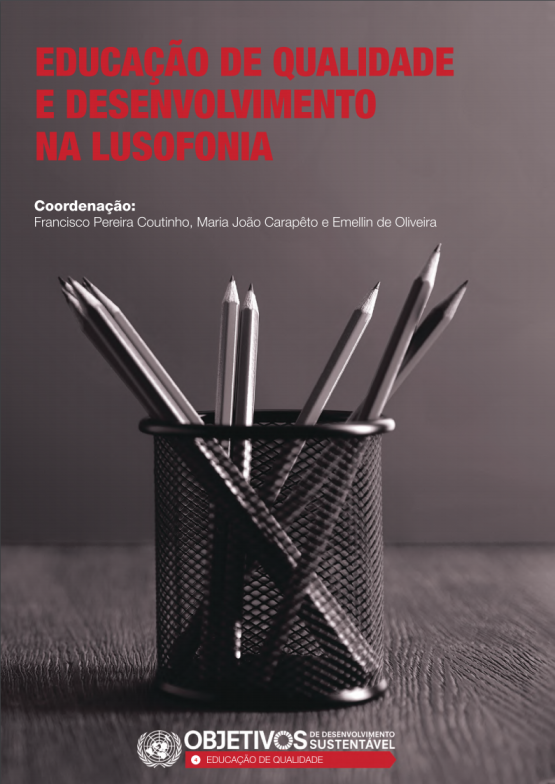
Conference “Quality Education and Development in the Lusophone World”

PROJECT INSTITUTO CAMÕES

Conference “Quality Education and Development in the Lusophone World”

2018–2019

The main objective of this conference is to bring together experts from across the Portuguese-speaking world to discuss the topic of Quality Education, as envisaged under Sustainable Development Goal 4 (SDG 4), from an innovative perspective tailored to the realities of Portuguese-speaking countries, with particular attention to Education and Human Rights as well as Challenges and Methodologies in Education.

Francisco Pereira Coutinho
Lead Investigator Francisco Pereira Coutinho
→
Lisbon: a model city in the inclusion of deaf people

PROJECT OTHER

Lisbon: a model city in the inclusion of deaf people

2018–2019

The main goal of this scientific research work is to identify the main problems related to the accessibility and participation of Deaf people in the Lisbon community and to suggest modifications to adapt the urban environment of Lisbon to their specific needs and wishes, in order to ensure a more equal treatment of the Deaf community in relation to the other inhabitants of the city. For this to be possible, we intend to carry out a bibliographical survey about the policies and legislation already existing on the subject so that, in sequence, there is a verification of its implementation in reality.

Lead Investigator
→
SPARC – Space Law Research Centre

PROJECT FCT

SPARC – Space Law Research Centre

2018–2022

The Space Law Research Centre (SPARC) is the first space law research group in Portugal. Created in the scope of the Centre for Research & Development on Law and Society (CEDIS) of the Nova University Law School, it aims to research and promote awareness on space law topics and issues and to develop a space law community in Portugal.

Francisco Pereira Coutinho
Lead Investigator Francisco Pereira Coutinho
→
Intra-África Pax Lusófona

PROJECT EUROPEAN COMMISSION

Intra-África Pax Lusófona

2017–2023

The programme provides full funding for the mobility of students who wish to undertake their postgraduate studies in one of the African partner universities and aims to create a teaching network that promotes the creation of synergies, creating opportunities within the African continent.

Jorge Bacelar Gouveia
Lead Investigator Jorge Bacelar Gouveia
→
Conference “Peace, Justice and Strong Institutions: A Path to Sustainable Development”

PROJECT INSTITUTO CAMÕES

Conference “Peace, Justice and Strong Institutions: A Path to Sustainable Development”

2017–2018

The theme of this conference was developed around Goal 16 of the United Nations Sustainable Development Goals (SDGs), namely Peace, Justice and Strong Institutions, which aligns with the activities that CEDIS has been carrying out in the field of Peace Education.

Francisco Pereira Coutinho
Lead Investigator Francisco Pereira Coutinho
→
Portuguese Competition Law Moot Court

Portuguese Competition Law Moot Court

2017 –

The Portuguese Competition Law Moot Court is a simulated court on Competition Law issues and is based on the jurisdiction and functioning of the Competition, Regulation and Supervision Court, integrated in the Civil District of Santarém.

Francisco Pereira Coutinho
Lead Investigator Francisco Pereira Coutinho
→
AwarEU (European Awareness)

PROJECT EUROPEAN COMMISSION

AwarEU (European Awareness)

2017–2018

AwarEU – European Awareness is a project funded under the “Social Inclusion through Education, Training and Youth” call within Key Action 3 – Policy Innovation Initiatives of the Erasmus+ Programme.

Lead Investigator
→
The new challenges of international law

PROJECT FCT

The new challenges of international law

2016–2020

International law has undergone and is undergoing a number of changes, caused above all by the process of globalisation and/or globalisation. International law can no longer be viewed solely on the basis of classical theories. New theories and instruments need to be taken into account, because there is a growing interaction between national and international legal systems, which encompass legal systems, administrative and organisational structures and different systems of cooperation and global regulation.

Francisco Pereira Coutinho
Lead Investigator Francisco Pereira Coutinho
→
Observatory for the Protection of Personal Data

PROJECT FCT

Observatory for the Protection of Personal Data

2016 –

The Observatory for the Protection of Personal Data is a research group whose main goal is to follow and monitor the implementation of the new legal framework for the protection of personal data in the European Union.

Francisco Pereira Coutinho
Lead Investigator Francisco Pereira Coutinho
→
The Legal Dimension of National Security and Defence Policy

The Legal Dimension of National Security and Defence Policy

2015–2020

Este projeto tem como objetivo analisar e avaliar os fundamentos orientadores (Constituição, Conceitos Estratégicos, leis gerais e orgânicas entre outras leis relevantes) em que assenta a política de defesa e segurança nacional e que prescrevem as competências dos principais atores e a sua articulação, dado não terem sido objeto de um estudo jurídico aprofundado.

José Fontes
Lead Investigator José Fontes
→
Public International Law in Portuguese-Speaking Legal Systems

Public International Law in Portuguese-Speaking Legal Systems

2015–2018

Sumário do Projeto

Jorge Bacelar Gouveia
Lead Investigator Jorge Bacelar Gouveia
→
Tenancy Forum

Tenancy Forum

2013 –

NOVA School of Law, through CEDIS, and Sociedade Rebelo de Sousa launched a forum aimed at promoting information-sharing and debate in the field of tenancy law.

Jorge Morais Carvalho
Lead Investigator Jorge Morais Carvalho
→
Portuguese-Speaking Constitutional Law – Updated

Portuguese-Speaking Constitutional Law – Updated

2013 –

Foundational texts of Constitutional Law in Portuguese-speaking countries

Lead Investigator
→
Legislation: Workers and Labour in Portugal, Brazil and Portuguese Colonial Africa

Legislation: Workers and Labour in Portugal, Brazil and Portuguese Colonial Africa

2013 –

This project aims to bring together, within a searchable database featuring both basic and advanced search functions, legal texts relating to labour and workers produced between 1521 (the year of the promulgation of the Manueline Ordinances) and 1988 (the year of Brazil’s current Constitution).

Cristina Nogueira da Silva
Lead Investigator Cristina Nogueira da Silva
→
Digital library of sources on the history of Portuguese Law (19th–20th centuries)

Digital library of sources on the history of Portuguese Law (19th–20th centuries)

2013 –

A Biblioteca digital Ardies (Arquivos Digitais para a História do Estado e do Direito (http://www.fd.unl.ptInvestigação/Biblioteca Digital) tem como objetivo disponibilizar a edição eletrónica da principal literatura jurídica portuguesa do século XIX – primeira metade do século XX. Na seleção das obras, têm sido privilegiadas as que foram produzidas no âmbito académico, embora a coleção integre também outros materiais jurídicos, de natureza diferente, complementares das anteriores (códigos, repertórios, coleções de legislação ou legislação “avulsa”, coleções de decisões dos tribunais, debates parlamentares de matérias jurídicas, algumas obras de divulgação jurídica).

Cristina Nogueira da Silva
Lead Investigator Cristina Nogueira da Silva
→
International Security Law: Key Challenges - International Terrorism, Weapons of Mass Destruction and Failed States

International Security Law: Key Challenges - International Terrorism, Weapons of Mass Destruction and Failed States

2013 –

International Security Law plays a fundamental role in the maintenance of international peace and security. However, this framework faces significant challenges that undermine its structures and normative foundations, particularly international terrorism, the proliferation of weapons of mass destruction (WMDs), and the phenomenon of failed states.

Lead Investigator
→
International Law in the DILP

International Law in the DILP

2012–2013

Public International Law rules exert an equally significant influence on domestic legal systems. However, an examination of national constitutions reveals that the status accorded to these rules within their respective legal orders is not uniform.

Jorge Bacelar Gouveia
Lead Investigator Jorge Bacelar Gouveia
→
Constitutional Justice at DILP

Constitutional Justice at DILP

2012–2013

The project “Constitutional Justice: A Portuguese-Speaking Law Perspective” (JC-DILP) is an initiative of CEDIS – Research & Development Centre of NOVA School of Law and IDILP – Institute of Portuguese-Speaking Law, coordinated by Professor Jorge Bacelar Gouveia.

Jorge Bacelar Gouveia
Lead Investigator Jorge Bacelar Gouveia
→
Conference “Gender Equality and Mobility: Challenges and Opportunities for Development in the Lusophone World”

PROJECT INSTITUTO CAMÕES

Conference “Gender Equality and Mobility: Challenges and Opportunities for Development in the Lusophone World”

2012–2014

The theme of this conference was developed around Goal 5 of the United Nations Sustainable Development Goals (SDGs), namely Gender Equality, which aligns with the activities that NOVA School of Law has been pursuing in this field.

Francisco Pereira Coutinho
Lead Investigator Francisco Pereira Coutinho
→
Intellectual Property Rights Licences

Intellectual Property Rights Licences

2011 –

This project aims to promote understanding of the principles underlying the regulation of intellectual property licensing, both in the field of copyright and industrial property rights, as well as to examine their practical implications. Its purpose is to identify the rules governing the granting of authorisations to exploit intellectual works or simply to use them, through the analysis of different types of contracts. In addition, the project seeks to determine whether the current legal framework provides adequate protection for rights holders or whether legislative reforms may be advisable.

Lead Investigator
→
Protecting privacy and personal data in a post-Charter Europe (PROTECT)

PROJECT FCT

Protecting privacy and personal data in a post-Charter Europe (PROTECT)

2011–2023

This project aims to contribute to a better understanding of the legal framework governing the collection, processing, and use of personal data databases within both the European Union Internal Market and the Area of Freedom, Security and Justice, in light of the challenges and opportunities arising from the Charter of Fundamental Rights of the European Union.

Lead Investigator
→
Portuguese Moot Court of International Law

Portuguese Moot Court of International Law

2010 –

Moot Courts are simulations of trials, where students have the opportunity to represent one of the parties in a hypothetical litigation process under question.

Lead Investigator
→
The Governance of Others: Political Imaginaries in the Portuguese Empire (1496-1961)

PROJECT FCT

The Governance of Others: Political Imaginaries in the Portuguese Empire (1496-1961)

Ref.ª 104640 · 2010 –

This project examines how, between 1496 (the decree ordering the expulsion of Jews from the Kingdom of Portugal) and 1961 (the abolition of the Political, Civil and Criminal Statute of the Indigenous Peoples of Angola and Mozambique), the governance of the different populations of the Portuguese Empire was conceived and debated. Responses to this issue gave rise to proposals that oscillated between more inclusive and more exclusionary perspectives.

Cristina Nogueira da Silva
Lead Investigator Cristina Nogueira da Silva
→
Post-National Sovereignty: The European Union Towards a Political Identity

Post-National Sovereignty: The European Union Towards a Political Identity

Ref.ª 108287 · 2008 –

This project aims to understand how European institutions and civil society actors have contributed to shaping a European identity and to reconceptualising sovereignty within the European space from a comparative perspective.

Lead Investigator
→
Frustration of Contract Performance

Frustration of Contract Performance

2006–2012

The project Frustration of Contract Performance was completed in June 2012, following the administration of a survey on contractual non-performance to residents of the Lisbon Metropolitan Area and the dissemination of its findings.

Lead Investigator
→
Observatory of Portuguese Legislation

PROJECT FCT

Observatory of Portuguese Legislation

2005–2022

This project was born with the aim of carrying out quantified analysis of various aspects of legislation, which gave rise in July 2007 to the annual publication of the “Bulletin of the Observatory of Portuguese Legislation”. The construction of a relational database is under development, which will allow access to the «life» of an act of legislation – from its adoption to its relationship with other acts of legislation, and its termination.

Francisco Pereira Coutinho
Lead Investigator Francisco Pereira Coutinho
→